
Bangladesh draw the line on India venues: Why this T20 World Cup 2026 issue could reshape the tournament

Bangladesh have taken a firm stance ahead of the ICC Men’s T20 World Cup 2026: they do not want to play their scheduled matches in India, and the message being signaled is blunt — move our fixtures, or we’re not comfortable participating under the current plan.
For a tournament that begins in early February and runs into March, this is the kind of late-breaking dispute that administrators dread. Not because schedules can’t be changed — they can — but because every small adjustment triggers a chain reaction: venues, ticketing, travel windows, broadcast planning, security deployment, practice facilities, and even the competitive balance of a group.
What’s driving Bangladesh’s position?
From what’s been reported and discussed across cricket circles, Bangladesh’s stance is rooted in player safety and security assurances. When a board starts talking in those terms, it’s rarely about cricket alone. It’s about risk assessment: the environment around the team, movement between hotel and stadium, crowd control, and whether security guarantees meet the threshold the board and government advisers are willing to accept.
This is also why the tone matters. If the issue were simply “we’d prefer Sri Lanka conditions,” it would be negotiable. When the language becomes “we won’t,” it forces the ICC into decision mode.
Why this isn’t a simple venue swap
Fans often think shifting a match from one venue to another is like moving a dinner reservation. It isn’t. At World Cup level, a “move” can mean:
- Fresh ticketing arrangements (refunds, re-allocations, new sales windows)
- Reworked team logistics (flights, hotels, training venues, local transport routes)
- Broadcast changes (camera plans, production teams, advertising inventory)
- Security re-approval (new threat assessments, new deployment plans)
- Competitive fairness questions (conditions, travel fatigue, rest days)
Even if you keep Bangladesh’s matches inside the host framework, the ripple effect can still hit other teams in their group.
The ICC’s realistic options (and what each one costs)
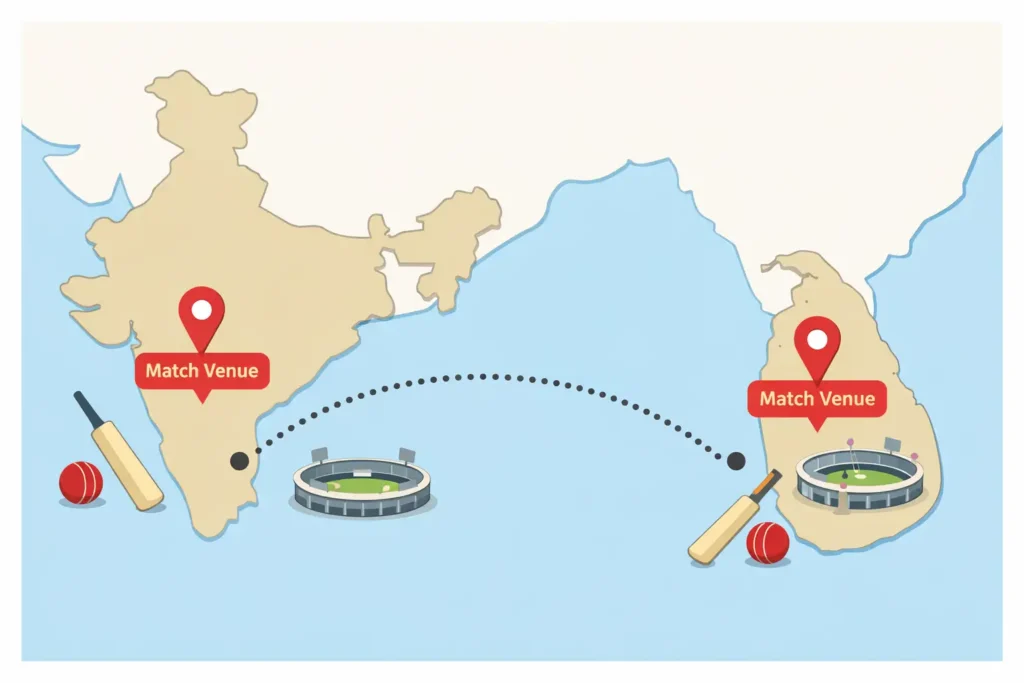
1) Move Bangladesh’s matches to Sri Lanka (the cleanest de-escalation)
This is the most straightforward way to address the core concern if the problem is “India venues.” Sri Lanka already has World Cup infrastructure planned, and shifting Bangladesh fixtures there can be framed as a practical solution.
The cost: it sets a precedent — that a team can push for relocation late in the cycle — and it still disrupts ticketing and broadcast plans.
2) Keep matches in India but change the city (a compromise that may not satisfy Bangladesh)
If Bangladesh’s concern is tied to a particular venue or city, a move within India could be pitched as a middle path.
The risk: if Bangladesh’s line is about the country, not the city, this won’t solve the underlying issue and could prolong the standoff.
3) Provide enhanced security assurances and keep the schedule unchanged (the “stand firm” approach)
The ICC can argue that host nations are capable of delivering safe tournaments with robust security protocols and that cricket must not be held hostage by political winds.
The downside: if Bangladesh still refuse, you now have the ugliest scenario in global sport — forfeits, walkovers, legal disputes, and a group table shaped by boardroom decisions rather than cricket.

4) A hybrid workaround (cricket has done it before)
Cricket administrators have, in previous tournaments, used hybrid arrangements when cross-border travel issues threatened participation. It’s not ideal, but it’s a known emergency lever.
The challenge: hybrid solutions are often politically sensitive and always messy — but they can protect the tournament’s integrity better than walkovers.
The cricketing angle most coverage misses: conditions can change Bangladesh’s whole plan
A venue change isn’t just “where.” It’s how the match plays.
- Dew factor: Some Indian venues in February can produce heavy dew, tilting games toward chasing.
- Pitch pace vs grip: Bangladesh’s bowling balance — especially how they use cutters, left-arm pace, and spin matchups — depends heavily on whether the surface holds or skids.
- Powerplay strategy: Bangladesh’s best path in T20 often involves winning small phases: two tight overs, a wicket, then squeezing. That is much easier on grippy, slower surfaces than on true batting decks.
So if matches shift from an Indian venue to a Sri Lankan one (or vice versa), Bangladesh’s ideal XI and their tactics could change dramatically — which is why the lack of clarity hurts them more than anyone else.
The human factor: uncertainty is a performance killer
This part rarely gets written properly: when a team doesn’t know where it’s playing, everything becomes slightly compromised.
- Planning net sessions becomes guesswork (hard ball? wet ball drills? spin-heavy prep?)
- Players struggle to settle into tournament rhythm
- Staff can’t lock in travel recovery plans
- Families and support systems remain unsettled
And in T20 cricket, “slightly compromised” can be fatal. One poor travel day, one disrupted warm-up week, one unsettled mindset — and you’re out before the Super Stage conversation even starts.
What happens next: the signals to watch
If you’re covering this story on your sports site, don’t chase rumours — track decision signals:
- An updated official schedule (any re-issued fixture list is the strongest confirmation)
- Neutral language from the ICC (“working with stakeholders” often means negotiations are active)
- Bangladesh changing tone from “won’t play” to “will play if…” (that’s a doorway to a solution)
- Security plan details (if specific protocols are announced, the ICC is trying to keep fixtures in place)
Bottom line
Bangladesh’s refusal to play in India venues (as currently planned) has turned into a genuine tournament problem — not a social media argument. The ICC now has to choose between flexibility (and the chaos that comes with it) or firmness (and the reputational damage if the dispute escalates).
For fans, the hope is simple: resolve it fast, resolve it cleanly, and let the World Cup be decided by overs and wickets — not by press statements.